
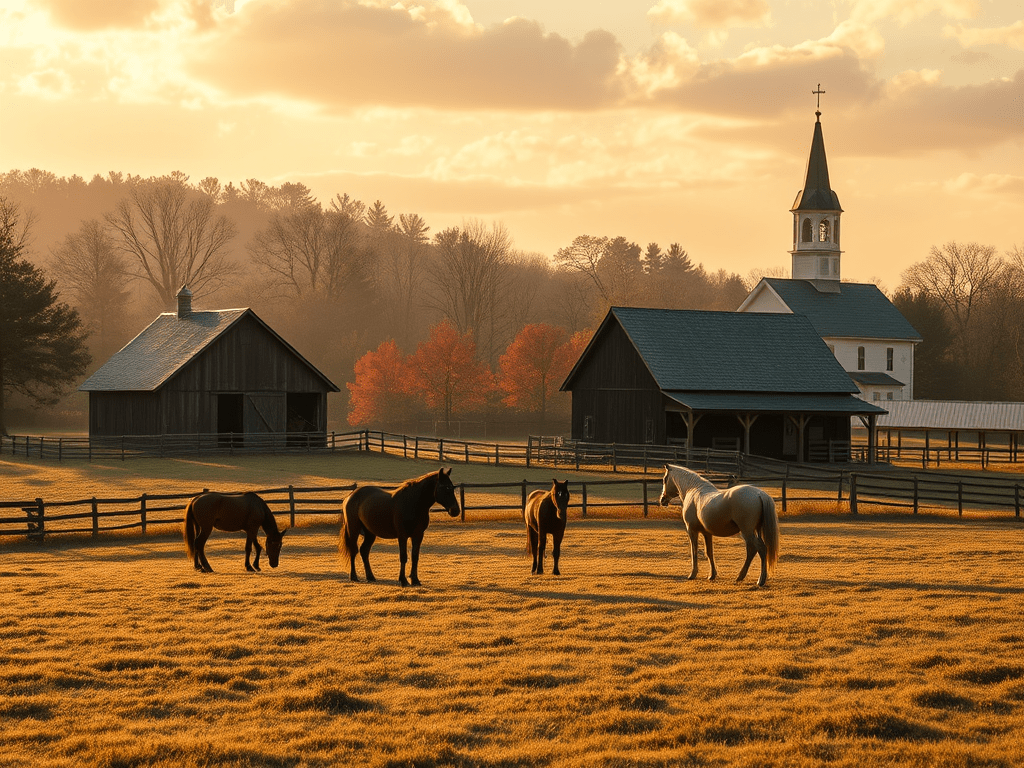
in spite of bending and breaking quite a few rules of literary fiction writing, “The Stackpole Legend” manages to be a hugely satisfying read
“The Stackpole Legend” (Wendell Berry, The Threepenny Review) is not your conventional short story. Reading it can be revealing, especially to new and emerging writers. I say this because it busts so many myths early writers accept as gospel truth.
Let us see how this short story shows scant regard to literary writing “rules”. HERE ARE SEVEN MYTHS THAT THE STORY BUSTED AND HOW.
1. “Show, Don’t Tell”: I wonder what Anton Chekov would have said, famously quoted as saying: “Don’t tell me the moon is shining; show me the glint of light on broken glass.” The entire story is a ‘telling’. The anonymous narrator is merely ‘telling’ a story: the story of a local legend by the name of Stump. The narrator only once registers presence in the entirety of the narrative. The tale is in perfect chronological order — right from his birth until he has had many grandchildren. The body of the story is how he pursues his future wife and wins her over. Readers will love the details and nuances. There are observations that lend a spectacular atmospheric quality to this piece even in its ‘telling’. Reading The Stackpole Legend, one has the same satisfaction as you’d have listening to the telling of a story by a master storyteller, or by one who has the power to mesmerize the audience like a magician.
2. “Active Narrator Drives Stories.”: There is no active narrator here. The narrator is doing his thing — narrating the “legend” of Delinthus Stackpole of the Stackpole family at Port William. We thought such stories, voiced by invisible but omnipresent narrators, was a thing of the past — the true act of story telling was dead, but here it is in 2025, a narrator who is telling us the life-story a person. The narrator pulls the reader out of the legend momentarily only when saying, and I quote: As I recall this story of Stump Stackpole out of the story of old Port William, which was told off and on a few sentences at a time in Port William’s unstopping conversation about itself,…
3. “Do not serve your readers a predictable ending.”: The story of Stump and Kizzie Stackpole continued a long time on their good farm at the head of Owl Hollow and in the conversation of old Port William. They brought into the world a daughter and four sons, as healthy and hardy as themselves. They taught their children to work in support of their family and their farm.
This is how the story draws to a conclusion. Boy meets girl, they marry, have kids, and then they live happily ever after. How many times have we been told that is an unoriginal idea and should not be copied? But that is exactly what happens here, and yet we are so satisfied by the end.
4. “Dialogues are essential”: With a torrent of descriptions and background information flooding the first twelve paragraphs, the first bit of dialogue appears at paragraph number 13, when the titular character’s “friend and sometime helper, Winky Hample” says something.
…until Winky spoke. “Who you talking to, Stump?”
“Whoa!” Stump said.
Notice the brevity of the conversation. After this one, there are dialogues appearing in regular intervals, and every time, instead of adding to the narrative, as writers are usually advised to do, the story only reinforces something that has just been told to the reader already.
5. “Develop complex characters that engage the reader”: This is one story I read in a very long time that does not make its characters complicated. Like the classical stories, characters look and behave the way they are expected to.

6. “Embrace subtext and ambiguity”: The theme emerges slowly but the story manages to steer clear of subtext, metaphors, ambiguity etc. Instead, it engages the reader by explaining everything. Each turn of the title character’s life is supported with why it happened and each bend the plot takes, the reader is taken along with full confidence and knowledge, instead of trying to surprise/baffle or betray the reader’s line of thinking.
7. “Do not be too autobiographical”: Author Wendell Berry has lived with his wife, Tanya Amyx Berry, at Lanes Landing on the Kentucky River since 1965, writing and teaching, and earning a living that has come partly from subsistence farming and subsidence housekeeping. They have two children, five grandchildren, and four great-granddaughters. I wonder how much of this story is hypothetical. I find many similarities with a life I can imagine the author may have been leading and this story. The narrative is brilliantly nuanced, and such a thing as drawing from one’s life is not very uncommon either. So why are we told not to be too autobiographical? The risk involved as to why such a thing is not advisable is because there is a fat chance of the writer being too partial, and of not allowing the required distance to build-up between an event and its retelling so as to infuse too much emotion and tension. I think this story is testimony to the fact that, done well, literary fiction can be majorly autobiographical.
Readers may call back to memory other examples. Go Tell It on the Mountain by James Baldwin, for example. Loosely based on Baldwin’s life growing up in Harlem with a strict stepfather and religious upbringing. It’s a fictional novel, but Baldwin infused it with the emotional truth of his own struggles with identity, faith, and sexuality.
What are your thoughts? Do you think short story or fiction writing rules are overrated? Let me know in the comments.
[Originally published in Mandira Pattnaik’s MEDIUM on May 14, 2025]


4 responses to “WINNER OF 2025 O. Henry Prize for Short Fiction BUSTS SOME WRITING MYTHS”
I always feel rules are overrated and one must be flexible, allowing the story to carry them forward. Not every story deserves the same treatment.
LikeLiked by 1 person
[…] WINNER OF 2025 O. Henry Prize for Short Fiction BUSTS SOME WRITING MYTHS […]
LikeLike
[…] the first edition of A Newsletter with a View of One’s Own, my writing short stories/fiction craft essay “WINNER OF 2025 O. Henry Prize for Short Fiction BUSTS SOME WRITING MYTHS”, and […]
LikeLike
[…] WINNER OF 2025 O. Henry Prize for Short Fiction BUSTS SOME WRITING MYTHS READ […]
LikeLike